The Antinori Wine Heist: 30,000 Bottles Gone in Tuscany
Last updated: October 12, 2026
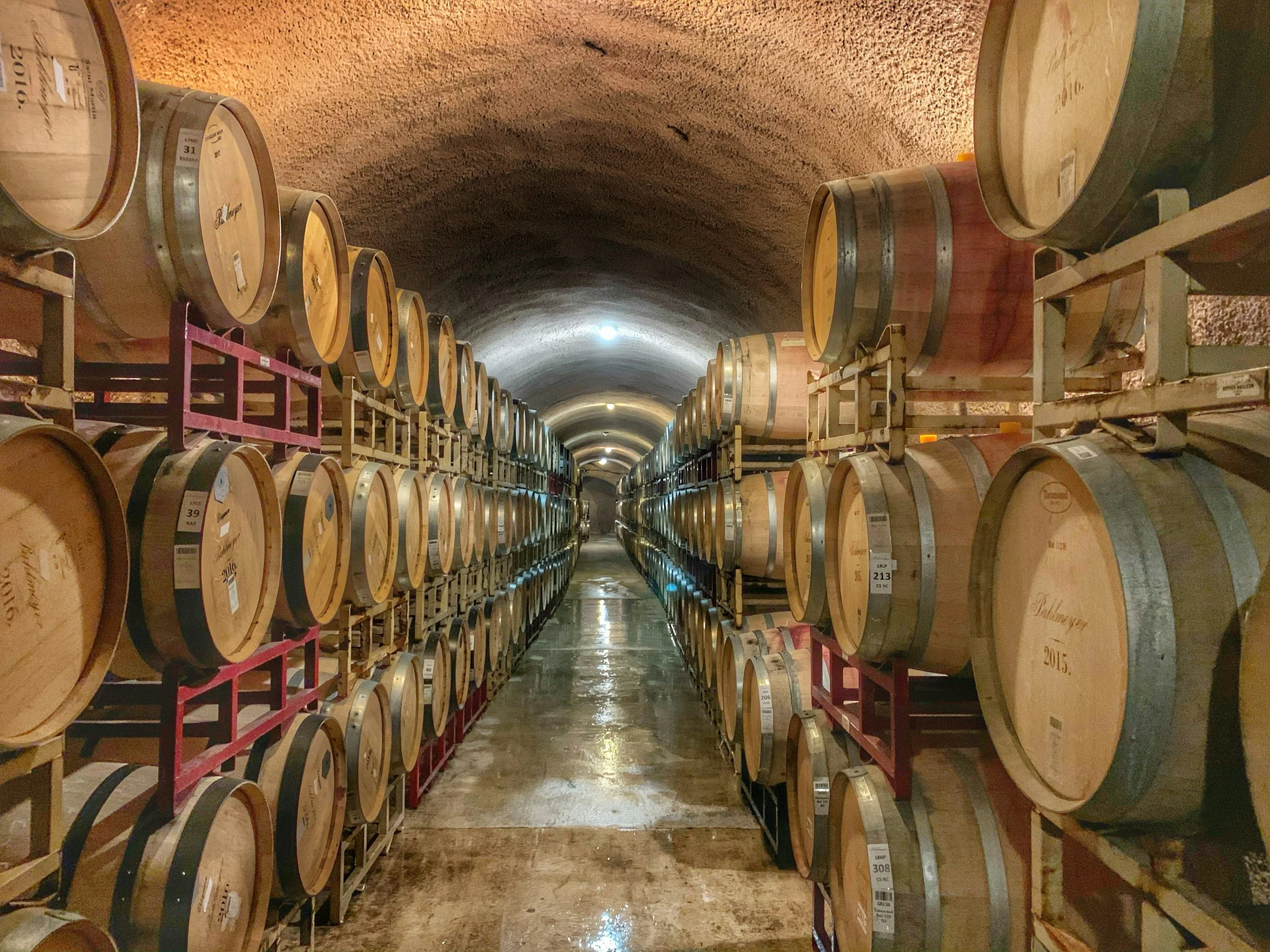
During the night of October 3 and 4, two trucks arrived at a Marchesi Antinori logistics facility near Cortona, in Tuscany. By the time they left, around 30,000 bottles of wine were gone.
The operation reportedly lasted just under three hours. The people inside used forklifts from the facility to move the wine, while around ten exterior surveillance cameras were reportedly covered with foam. Cameras inside still recorded people dressed in dark clothing, hats and gloves. The trucks are believed to have left at around 1:30 in the morning.
The estimated value of the stolen wine is around €5 million, but the names on the bottles make the story even more remarkable: Solaia, Tignanello and Guado al Tasso.
If Antinori is not a familiar name, it is difficult to overstate its place in Italian wine. The family traces its winemaking history back to 1385 and today represents the 26th generation of the business. Over more than six centuries, Antinori has become one of the best-known Italian wine names in the world, with estates in several parts of the country and wines that travel far beyond Italy.
Tignanello helped change the direction of modern Tuscan wine. Solaia is produced in much smaller quantities and is followed closely by collectors. Guado al Tasso comes from Bolgheri, along the Tuscan coast, another part of the region that has become internationally important for wine.
So these were not simply 30,000 random bottles sitting in a warehouse.
According to Antinori CEO Renzo Cotarella, around 10,000 bottles of Solaia 2023 may have been stolen. He has said that production of that vintage was around 50,000 bottles, meaning roughly one fifth of it may have disappeared in one night.
That number was probably what first made me stop and think about what had actually happened. Then I started reading more, and the story became much harder to leave alone.
An Antinori representative told Fortune that the alarm system had been switched off from inside the facility the previous day. More recent reporting has added another interesting question. Investigators are reportedly examining whether somebody may have known that this particularly valuable inventory had been assembled and was waiting for shipment. Antinori's dispatches apparently do not leave according to a fixed timetable.
That does not mean somebody inside the company was involved, and there have been no publicly announced arrests. But it helps explain why investigators are looking closely at what happened before the trucks ever arrived.
As of October 12, Police is reportedly examining footage from more than 100 surveillance cameras as they try to reconstruct the trucks' movements through the road network surrounding Cortona. Cellular-network records are also being studied, and physical evidence has been sent to the RACIS forensic laboratories in Rome in the hope that DNA might help identify at least one of the people involved.
It is an extraordinary story on its own. For me, though, it also brought together two parts of my life that I rarely have a reason to talk about at the same time.
California, criminology and 30,000 bottles of wine
I was born and raised in Rome, but I spent almost ten years living in the United States. I moved to California when I was young, built a large part of my adult life there and eventually graduated from the University of California, Irvine with a degree in Criminology, Law & Society.
Today I am back in Italy, and my life looks very different. Through Luca Italian Experiences, I spend much of my time thinking about where people should travel, which towns are worth spending time in, which wineries and producers have something meaningful to share, where they should eat, which family businesses I want them to meet and how all of those pieces can become one coherent trip.
Criminology and Italian travel do not come together particularly often.
Apparently all it took was somebody stealing €5 million worth of wine.
What fascinated me first was not a complicated question about criminal law. It was something much more practical: what do you actually do with 30,000 bottles of Solaia, Tignanello and Guado al Tasso once you have stolen them?
That is a huge amount of wine.
You need somewhere to put it. You need people and equipment to move it. You need transportation. Eventually, unless the plan is to host the longest dinner party in history, you also need somebody willing to buy it.
And the better the wine, the stranger that problem becomes.
A few expensive watches can disappear. Cash can change hands. A valuable object can potentially move between a small number of people. Thirty thousand bottles take up space, and these particular bottles carry names that people in the wine business immediately recognize.
That reputation is precisely why they are worth so much. It may also make them harder to quietly return to the market.
Antinori has warned commercial partners to pay attention to unusually sourced bottles. Investigators are reportedly considering the possibility that the trucks have already left Italy, although that has not been established. Whether the wine remains together or is divided across different markets is another question nobody publicly knows the answer to yet.
The more I thought about it, the more interesting the wine itself became as part of the crime.
This is not even the first time Antinori's reputation has attracted criminal attention. In 2019, Italian authorities investigated an international operation involving approximately 11,000 bottles falsely presented as Tignanello. In that case, the problem was counterfeit wine: a less valuable product being made to look like something it was not.
This time the bottles are real.
That creates the opposite problem. If stolen Solaia or Tignanello eventually appears somewhere for sale, the wine itself may be perfectly authentic while the history of how it reached the seller is not.
I find that distinction fascinating because most of us think about authenticity first. Is the bottle real? Is the label real? Is what is inside actually Tignanello?
Now there is another question: where did this bottle come from?
For importers, restaurants, merchants and collectors, provenance suddenly becomes extremely important. An invoice, a distributor and a believable history of ownership can matter almost as much as the anti-counterfeiting features on the bottle itself.
There is also a wider Italian story developing around all of this. Antinori was not the only major wine producer targeted this year. More than 3,000 bottles were stolen from Banfi's operation in Strevi, Piemonte, in late June. In that case, Carabinieri Police later intercepted a vehicle, two people were apprehended and nearly half of the stolen wine was reportedly recovered. Then in September, Conterno Fantino in Monforte d'Alba, Piemonte, lost more than 3,000 bottles of Barolo wine in another carefully organized theft involving masked people, forklifts and vehicles.
There is no established evidence that all three crimes were committed by the same people. Italian investigators are reportedly exchanging information between the different cases, which makes sense given some of the similarities, but for now they remain separate investigations.
Still, three major wine thefts in one year inevitably make you think differently about what is sitting inside these warehouses.
To most of us, wine belongs at a table. To a winery, it is years of agricultural work, production and commercial planning. To a collector, one bottle can be an asset. To a restaurant or importer, it can be a scarce allocation.
And to somebody willing to steal it, apparently, it can be valuable inventory.
The other side of Tuscany
This is also where the story started connecting back to the work I do today.
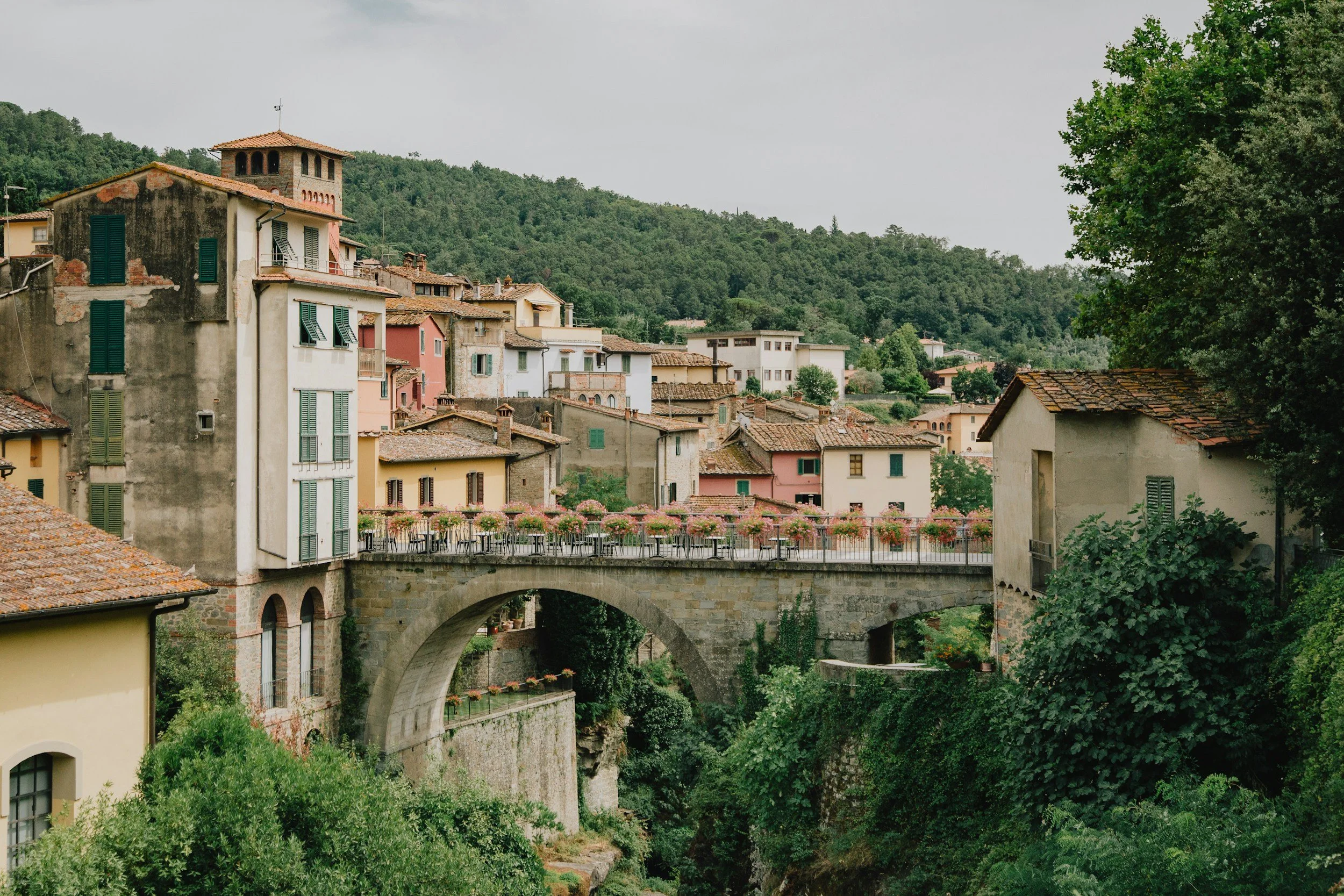
When most people think about Tuscany, they understandably think about the beautiful part first. Florence, small towns, vineyards, cypress trees, old farmhouses, wineries, food and long stretches of countryside. There is a reason people from all over the world want to travel there.
But one of the things I enjoy most about planning trips in Italy is understanding what sits behind that first image of a place.
When I bring people to a winery, I am not interested only in lining up three glasses and tasting them. Of course the wine matters, but I want to know why that wine could only have developed there, how the business began, who works behind it, what changed from one generation to another and how something made in an Italian vineyard eventually becomes recognizable in California, New York, London or Tokyo.
Antinori is an unusually large and famous example, but the principle is the same with the smaller producers we visit.
A bottle does not simply appear on a restaurant table.
Somebody owns or works the land. Somebody decides what to plant. Grapes are harvested. Wine is made and aged. Bottles are filled, labeled and packed. They go into warehouses. Orders are assembled. Distributors and importers move them across countries. Restaurants and wine shops receive them. Eventually someone in California opens a bottle that began its life in a field in Tuscany.
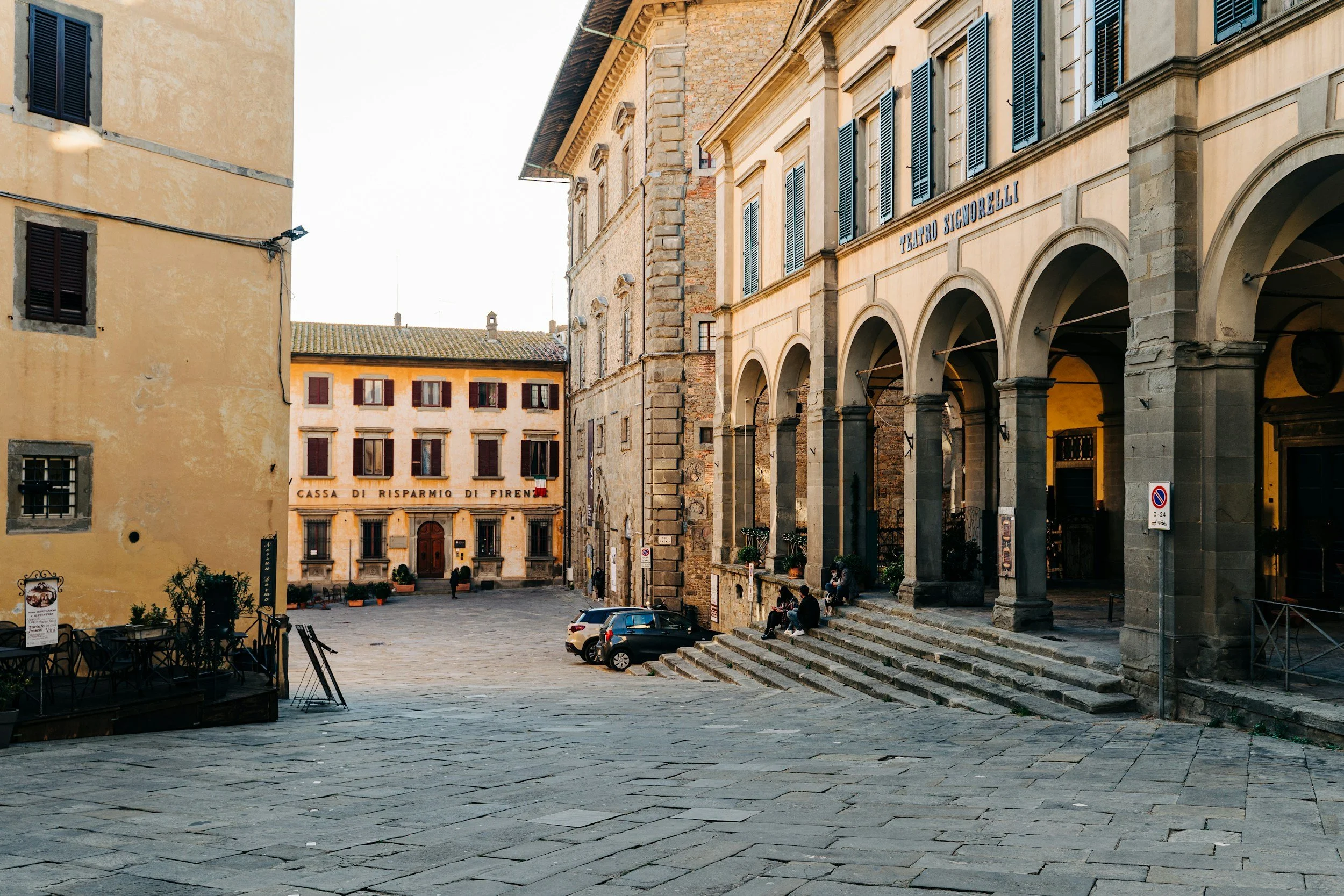
The crime happened at a logistics facility near Cortona, not among the vineyards at Antinori's famous Chianti Classico winery. It is probably one of the least romantic places in the entire wine chain.
Yet the warehouse is part of the story of Italian wine too.
In fact, this particular robbery makes that whole chain unusually visible. The thieves did not go into a vineyard and steal grapes. They targeted finished, high-value wine that had already accumulated all of the things that make it commercially valuable: the land, the work, the vintage, the producer's name, the international reputation and, importantly, a market waiting for the bottles.
That is the part that connects most strongly with the way I think about travel.
When you understand a product properly, you begin to understand the place that made it. Food and wine stop being things you simply consume while traveling and become ways of learning about agriculture, families, business, geography, history and the people who keep all of it moving.
This theft shows that from a completely unexpected direction.
It also raises an interesting question about value. Solaia begins as grapes grown in Tuscany, but by the time a bottle is released, it represents much more than the agricultural value of those grapes. There is scarcity, reputation, history, craftsmanship, international demand and the Antinori name attached to it. According to Cotarella's figures, losing roughly 10,000 bottles of Solaia 2023 could mean that 20 to 25 percent of that vintage's production is now missing.
That will affect allocations. Whether it substantially changes market prices is another question, and one that will take time to answer. Antinori has also said its insurance was not sufficient to cover a loss on this scale, so the eventual financial impact will depend on how much wine is recovered, what insurance does cover and how many planned shipments can still be fulfilled.
For travelers, none of this changes the reason to visit Tuscany. The vineyards are still there. The towns are still there. Antinori's visitor experiences are separate from the logistics facility that was targeted.
But the story does reveal a side of the Italian wine world that we do not normally see when we are sitting at a table.
I am going to keep following this one
When I was studying criminology at UC Irvine, I never imagined that years later I would move back to Italy, build a travel business and find myself following an investigation involving 30,000 stolen bottles of Tuscan wine.
But I suppose there is a connection between those two parts of my life after all.
Criminology made me curious about why people target certain things, how they move them and what happens afterward. Traveling through Italy and building Luca Italian Experiences has made me curious about the other side of that equation: how those things acquired their value in the first place.
Why this wine? Why this producer? Why would someone take the risk of moving two truckloads of bottles in the middle of the night? And if the wine is already hundreds or thousands of kilometers away, how does it eventually find its way back into a market where everyone now knows to look for it?
Those are the questions that have kept me reading about this case.
As of October 12, we still do not know who carried out the Antinori theft. We do not know whether anyone provided information from inside or outside the company, whether the wine is still in Italy, who may have been expected to receive it or whether investigators will eventually connect this case to another wine theft.
What we do know is that police now have more than 100 cameras to examine, telephone data to study and forensic material being analyzed in Rome. And somewhere beyond a warehouse near Cortona, around 30,000 bottles of some very recognizable Italian wine are still missing.
I am going to keep updating this story as genuinely new information emerges, rather than adding every new rumor that appears around it.
In the meantime, I keep returning to the same very simple question that got me interested in the first place.
What exactly does someone do with 30,000 bottles of Antinori?
Luca

Sources and further reading
This story is based on reporting from Italian and international news organizations, direct interviews with Antinori representatives, and official Antinori sources. I am updating it as meaningful new information becomes available.
source list:
Corriere Fiorentino, October 12, 2026
Simone Innocenti, “Furto di 30 mila bottiglie Antinori, al setaccio le telecamere: si indaga su un colpo su commissione”
This is the key source for the newest developments: 100+ surveillance cameras, possible escape routes, phone-network records, forensic evidence sent to RACIS, and investigation into possible advance knowledge of the shipment.
Read Corriere Fiorentino, October 12Corriere Fiorentino, October 10, 2026
Aldo Fiordelli and Simone Innocenti, “Maxi furto ad Antinori, 30 mila vini in viaggio verso il mercato nero. L’ipotesi Asia e l’Europa”
Important for Renzo Cotarella’s comments, the Solaia 2023 production exposure, insurance coverage, and discussion of possible resale markets. Corriere Fiorentino
Read Corriere Fiorentino, October 10Fortune, October 9, 2026
Catherina Gioino, “Exclusive: The alarms in wine’s biggest heist were switched off from inside before masked thieves took off with 30,000 bottles...”
This is the key direct interview with Antinori communications representative Lorenzo Vivoli about the alarm being switched off beforehand and the approximately three-hour operation. Fortune
Read FortuneLa Nazione, October 10, 2026
Olga Mugnaini, “Vini pregiati, il maxi furto. ‘Le 30mila bottiglie Antinori sparite in direzione Francia’”
Direct interview with Piero Antinori. Useful for the two trucks, the reportedly false plates, legitimate shipments intended for Bordeaux négociants and U.S. customers, and his view of the scale of the theft. La Nazione
Read La Nazione interview with Piero AntinoriLa Nazione, October 10, 2026
“Colpo milionario ad Antinori. Produttori increduli: ‘Solo una banda esperta può comportarsi così’”
Local reconstruction of the Cortona site, investigation and possible knowledge of the facility. La Nazione
Read La Nazione local investigationReuters, October 9, 2026
“Tuscan winemaker Antinori sees red after $6 million theft”
One of the strongest international baseline reports for the scale of the theft, 30,000 bottles, €5 million estimate, the wines involved and Antinori’s international importance. Reuters
Read ReutersAssociated Press, October 9, 2026
“Thieves pull off Italy's biggest-ever wine heist, stealing 30,000 bottles worth 5 million euros”
Useful independent international account of the core event, the delayed public announcement and Antinori’s warning to the market. AP News
Read Associated PressFinancial Times, October 9, 2026
“Famous Italian winery loses 30,000 bottles worth €5mn in heist”
One of the first major international reports and an important source for Cotarella’s initial comments. Financial Times
Read Financial TimesANSA, October 9, 2026
“Maxi-furto da 5 milioni alla Marchesi Antinori, rubate 30.000 bottiglie di vino”
Strong Italian wire-service account of the initial facts. ANSA.it
Read ANSA