A New Chapter for Rome
Via Veneto and What Comes Next
There are places in every city that people remember a certain way.
In New York, there was a time when Studio 54 defined a certain kind of freedom. It was not just a club. It was a moment. A place where music, people, and culture came together and shaped how a city felt at night.
In Los Angeles, parts of Sunset Boulevard carried that same energy.
In San Francisco, Union Square once held a rhythm that felt central, alive, and unmistakably part of the city.
Over time, those places changed.
The names stayed. The streets remained. But the feeling softened. Something became less defined.
Rome has those places too.
Via Veneto is one of them.
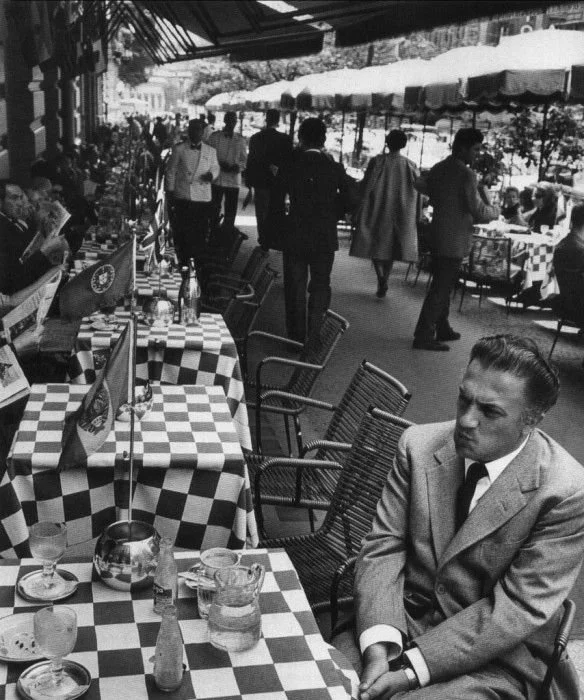
There was a time when this street defined how Rome was seen by the world.
You did not need to be there to recognize it. You could feel it through films, photographs, stories. The Rome of Sophia Loren, of Kirk Douglas, of Richard Burton. A place where actors, writers, and public figures moved naturally between cafés, hotels, and long evenings that seemed to extend without effort.
Even politics passed through here.
Richard Nixon stayed along this street during his visits to Rome in the 1960s. But what mattered was not only where he stayed. It was how the street was lived. People were outside. They gathered, watched, participated. Via Veneto was not a backdrop. It was the stage.
Just above it, Palazzo Margherita, home to the United States Embassy since 1946, added another layer. A quiet but constant connection between Rome and the world.
This was not just elegance.
It was relevance.
That period gave us even a word we still use today.
The term paparazzi was born from La Dolce Vita, where a photographer followed the protagonist through nights on Via Veneto, capturing moments that were never meant to be still. The street was alive enough to create language.
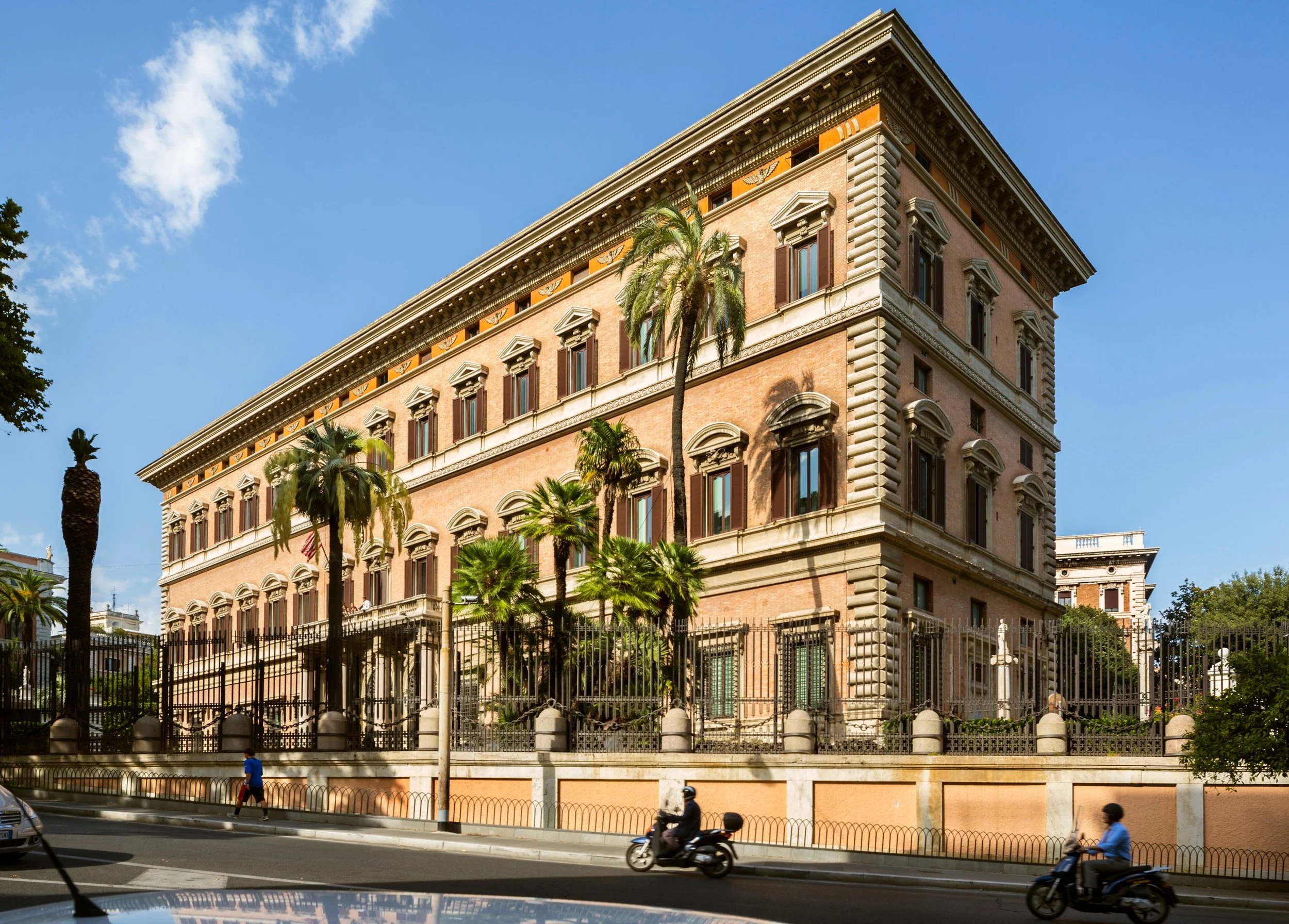
U.S. Embassy in Rome, firstly opened in 1946.
Then, slowly, that moment passed.
The energy shifted. Some of the places that once defined the street closed or lost direction. Others were replaced by something more anonymous, less rooted. The kind of change that does not happen all at once, but becomes clear when you return after some time.
For many people, Via Veneto became a place you walked through, not a place you stayed.
A name that still carried weight, but no longer held the same presence.
And yet, the street itself never lost its position.
It still connects Piazza Barberini to Villa Borghese. It still sits beside institutions, parks, and spaces that matter. It just needed to be experienced differently.
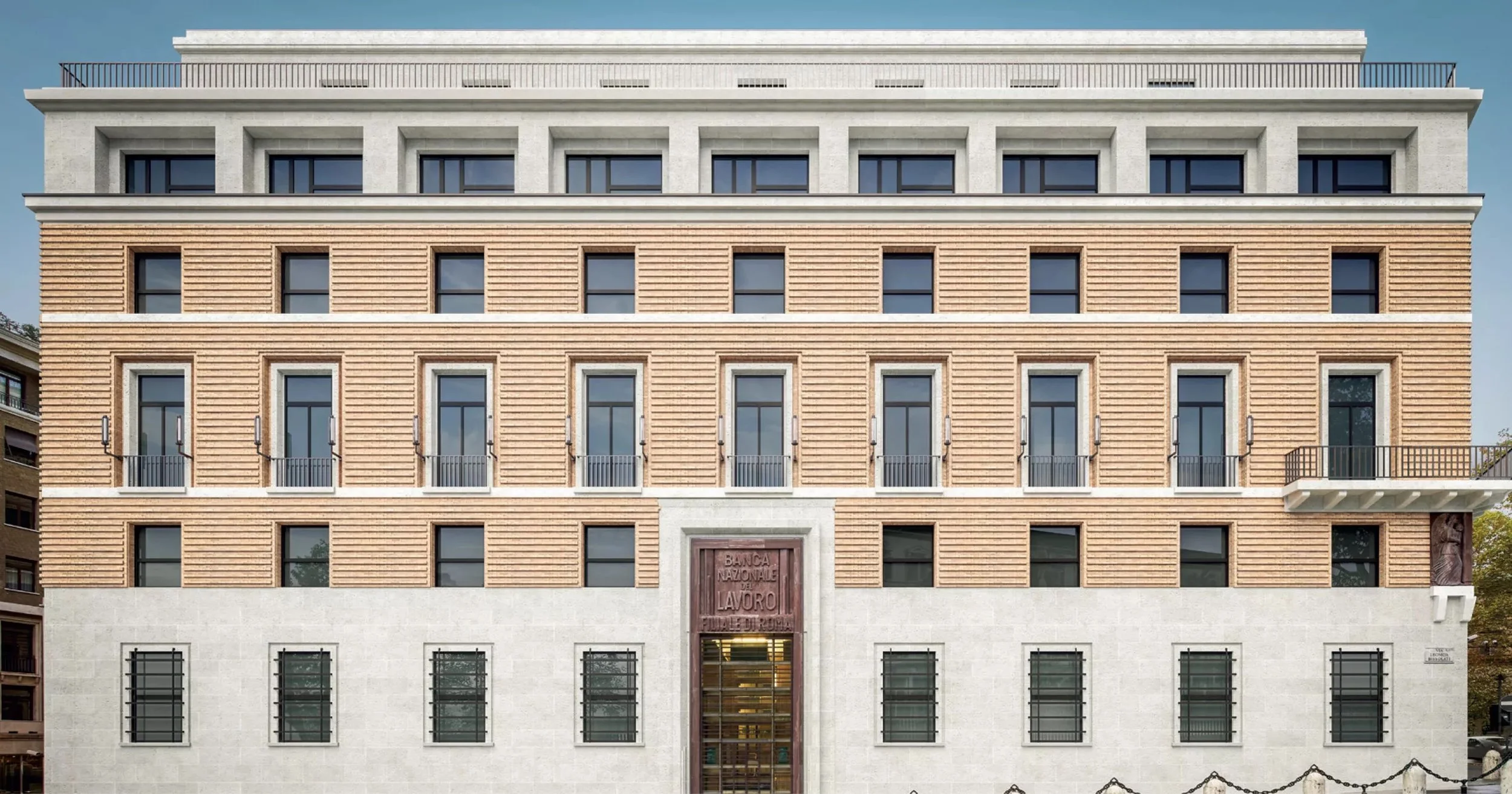
Front facade of Rosewood Hotel in Rome. Located in the former headquarters of Italy’s Banca Nazionale Del Lavoro (BNL) overlooking Via Veneto.
Now, something is shifting again.
In 2026, the Rosewood Rome will open inside a historic building along Via Veneto.
It is not just another hotel.
It is a signal that attention is returning to a part of the city that was never meant to be overlooked.
But where you stay is only the beginning.
What matters is how you move through what surrounds you.
If you begin your day here, you do not rush.
You step outside and let the city set the pace.
A short walk brings you to Faro - Specialty Coffee. The space is calm. The coffee is prepared with care. It feels contemporary, but still grounded in Italy. For many travelers, it quietly changes expectations.
Nearby, Luna by Faro offers something slower. A proper breakfast. Time at the table. A moment that feels familiar, even if you are far from home.
From there, the city opens.
At Palazzo Barberini, you move through rooms filled with Caravaggio and Raphael. But what stays with you is not only the art. It is the pace. You are not pushed. You are not rushed. You have space to look and to understand.
A few minutes away, the experience changes.
Santa Maria della Concezione dei Cappuccini offers something more direct. In the crypt below, bones are arranged into patterns that are both precise and unsettling. It is not meant to impress. It is meant to stay with you.
Then, the city opens again.
At Galleria Borghese, everything is controlled. Timed entry, limited access. Bernini’s sculptures feel almost alive when you see them without pressure. It becomes something close to personal.
Outside, Villa Borghese gives you space.
Light, air, distance. The day breathes.
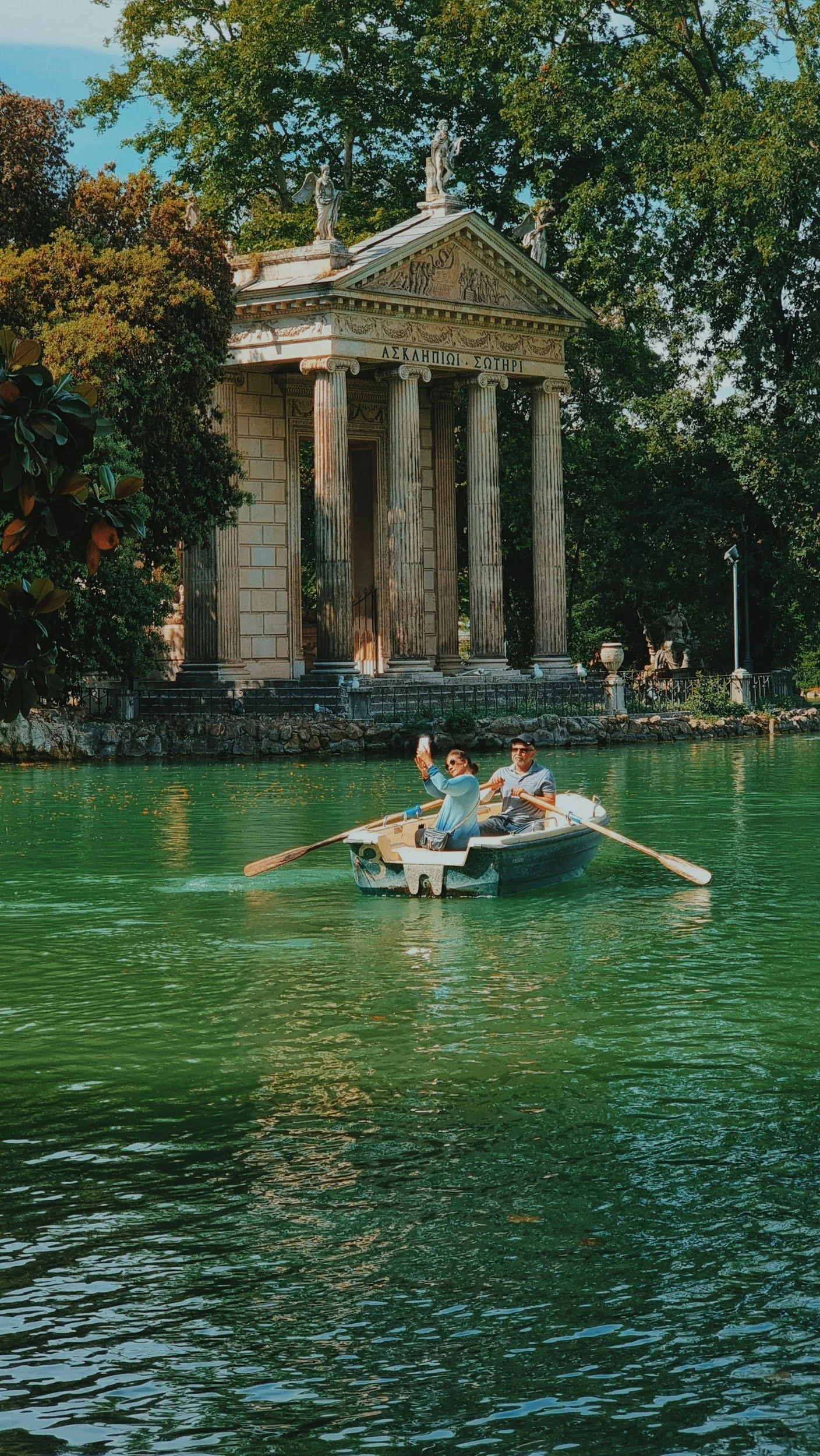
Tourists enjoying a peaceful afternoon at the Borghese park after a visit to Galleria Borghese.
This part of Rome works again when you approach it with the right rhythm.
You move between moments without forcing them.
You stop at places that most people would overlook. A small pastry at Zucchero, where everything is precise and modern. A quiet visit to Sartoria Gallo, where shirts are still made by hand, without display.
Nothing feels staged.
Everything feels connected.
And if you choose to go further, the city changes again.
In Coppedè, architecture becomes unexpected, almost surreal. At Sartoria Litrico, you step into a more formal expression of Roman elegance, shaped over generations.
What is happening around Via Veneto is not a return to the past.
That moment belongs to its time.
What is happening now is something quieter.
A different way of experiencing Rome. More intentional. More personal. Less about seeing everything, more about understanding what you are seeing.
For some travelers, a place like Rosewood will be the starting point.
But it is everything around it that gives meaning to the stay.
Rome does not reveal itself all at once.
It never has.
But when you move through it with the right rhythm, even a place that once felt lost can begin to feel complete again.