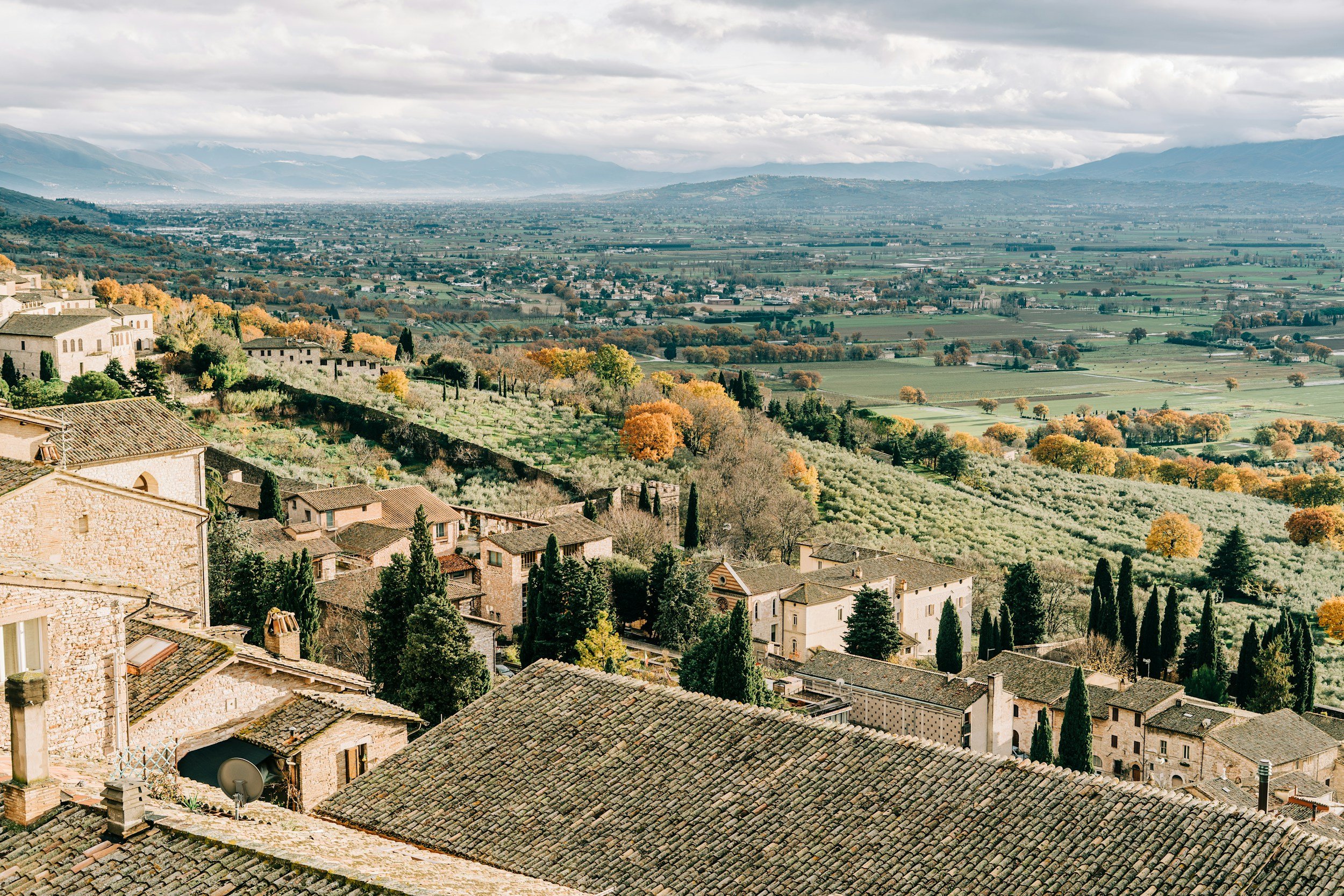
One of the things I like most about planning trips in Italy is that I can get in the car, spend a few days somewhere, and come back with a completely different idea of what I would want a traveler to experience there.
A couple of weeks ago, I did exactly that. I left Rome on Thursday and spent four days between Umbria and southern Tuscany. I wasn't looking for major monuments or trying to check famous towns off a list. I wanted to enjoy fall, see what was happening locally, eat what people were eating and, as always, keep my eyes open for experiences worth coming back for.
It ended up being four days of olive oil, local beer, chestnuts, mushrooms, crowded little towns, very quiet woods, one famous wine town and a few ideas for where Luca Italian Experiences should go next.
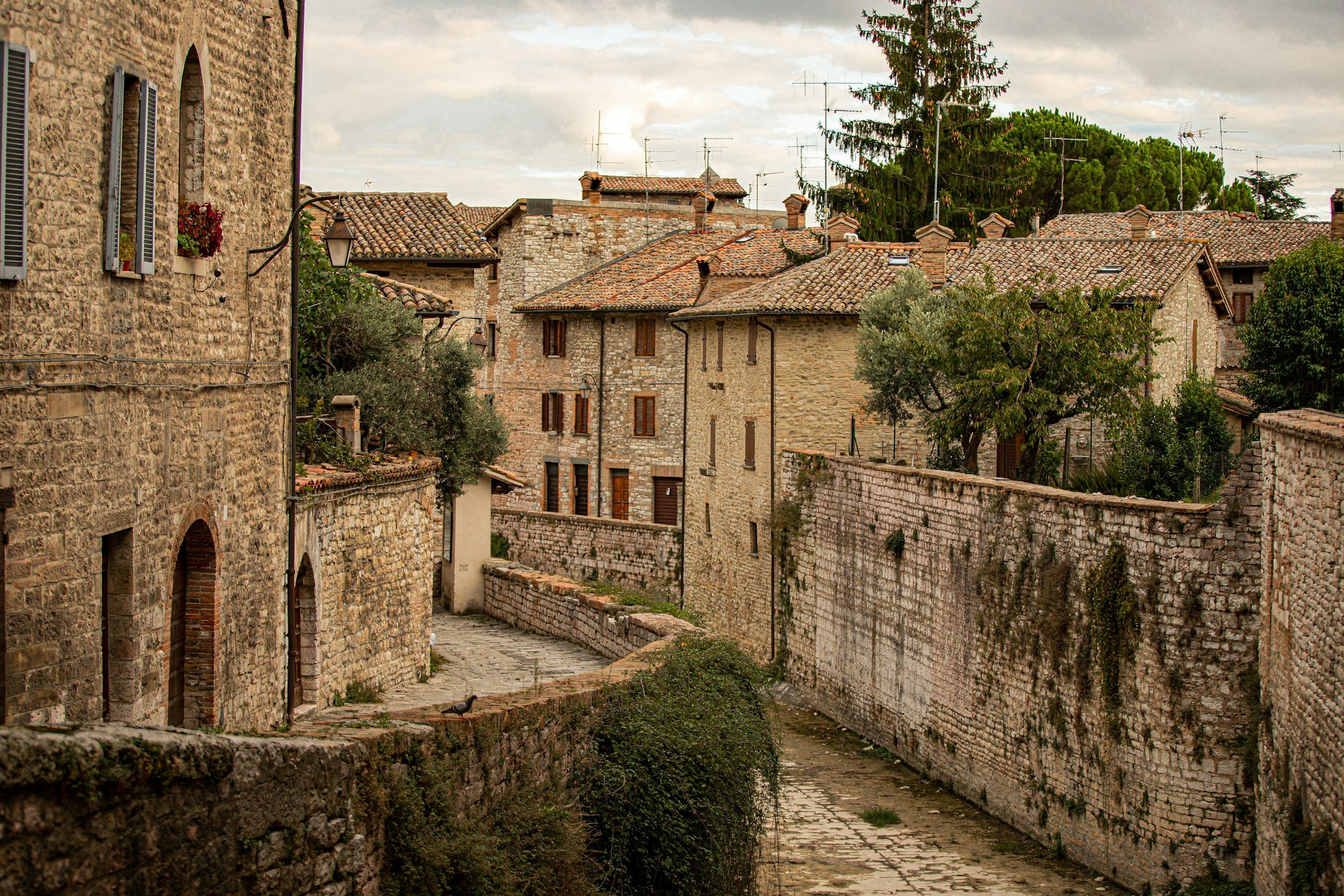
Back to my family's little town in Umbria
The first stop was Tuoro sul Trasimeno, a small town above Lake Trasimeno in Umbria, about two hours north of Rome and very close to the Tuscan border.
My mother's family is originally from this area and we still have a small apartment right in the center of town, so I've known Tuoro for a long time.
Today, the old center is much quieter than it used to be. People still live there, especially older residents who have been there forever, but many businesses and much of everyday life have moved downhill or toward larger towns nearby. If you arrive on an ordinary weekday, you might walk through the center and wonder where everybody is.
But these towns have a funny way of waking up.
Throughout the year, Tuoro and the other towns around Lake Trasimeno organize festivals and events around food, wine, olive oil, horses, art and whatever else the community decides to celebrate. When one of them happens, people come in from all around the area and suddenly the same streets that felt empty a few days earlier are full again.
That's part of what I wanted to see.
Fall around Lake Trasimeno is very different from summer. In spring and summer, the lake attracts plenty of visitors, including many travelers from northern Europe. By late October, most of that has disappeared. You are left with locals, quieter towns and, in my opinion, one of the most interesting times to eat in this part of Italy.
During those two days we moved around the lake, walked through a few towns and stopped at local events where the focus was on things like new olive oil, locally produced beer and seasonal soups. Nothing was designed for an international tourist. These were simply events people from the area were attending because that's what was happening that weekend.
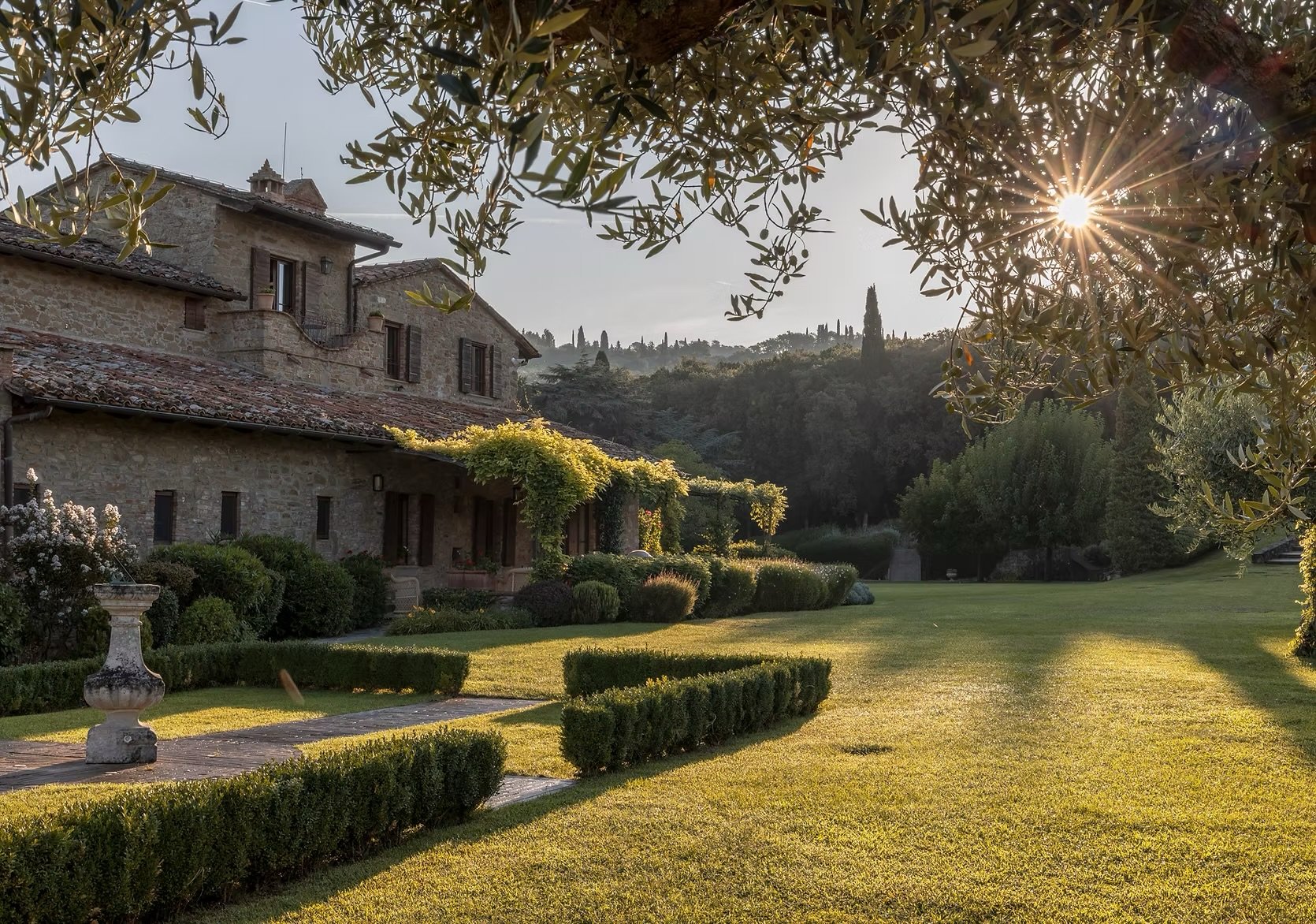
We also made one unusual stop to see Viandante del Cielo, a former convent overlooking Lake Trasimeno that was restored under George Lucas's direction and is now available as a private villa. I knew about it and wanted to see where it was. It is one of those slightly bizarre discoveries I love making while scouting: a centuries-old convent in the Umbrian countryside connected to the creator of Star Wars (photo below).
By Friday evening, we were back in Tuoro. The lake was quiet again, the tourists were mostly gone, and the whole experience felt very local.
Then on Saturday morning I was somewhere completely different, looking at the ground for mushrooms.
Saturday morning: Monte Amiata
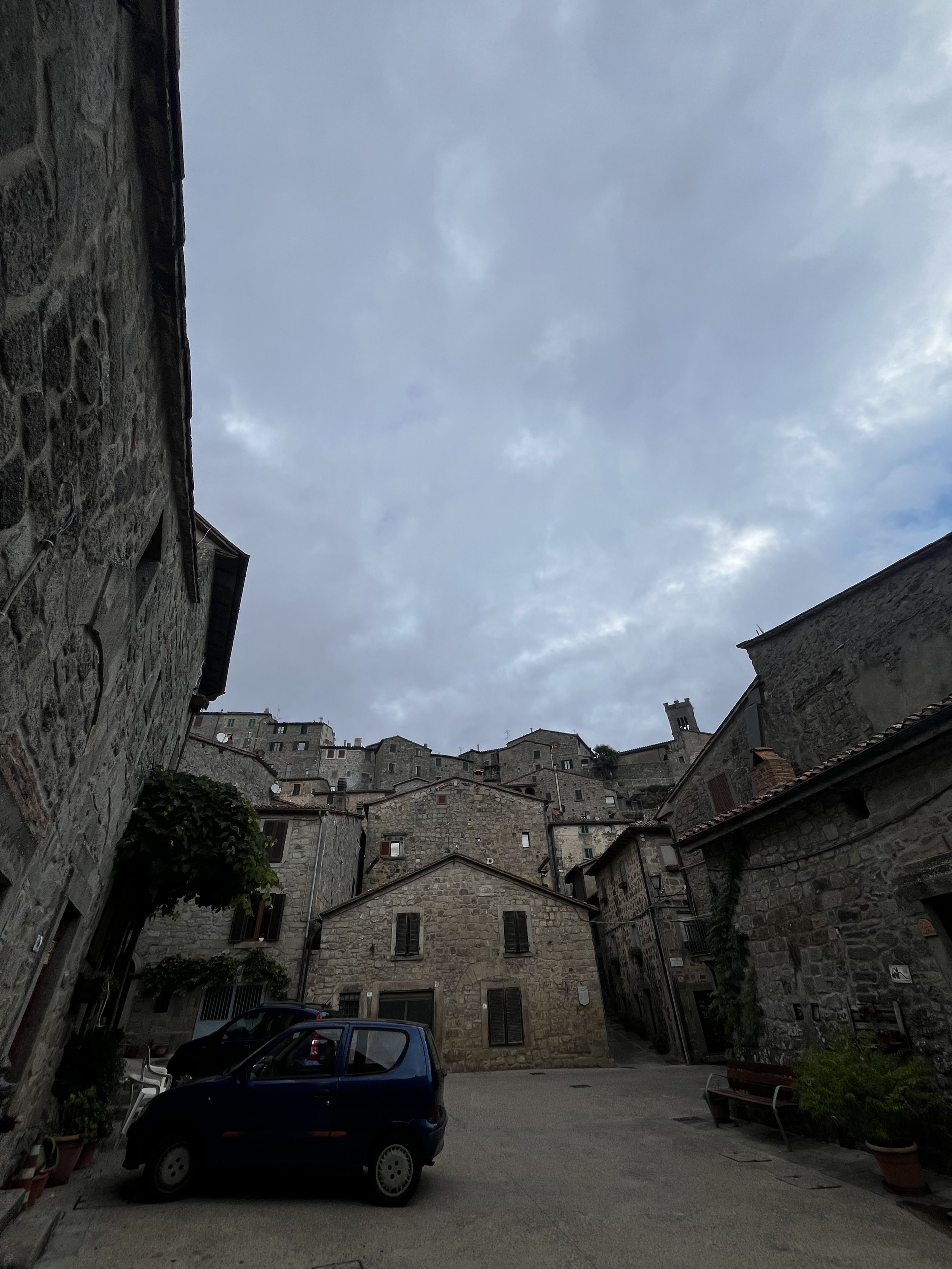
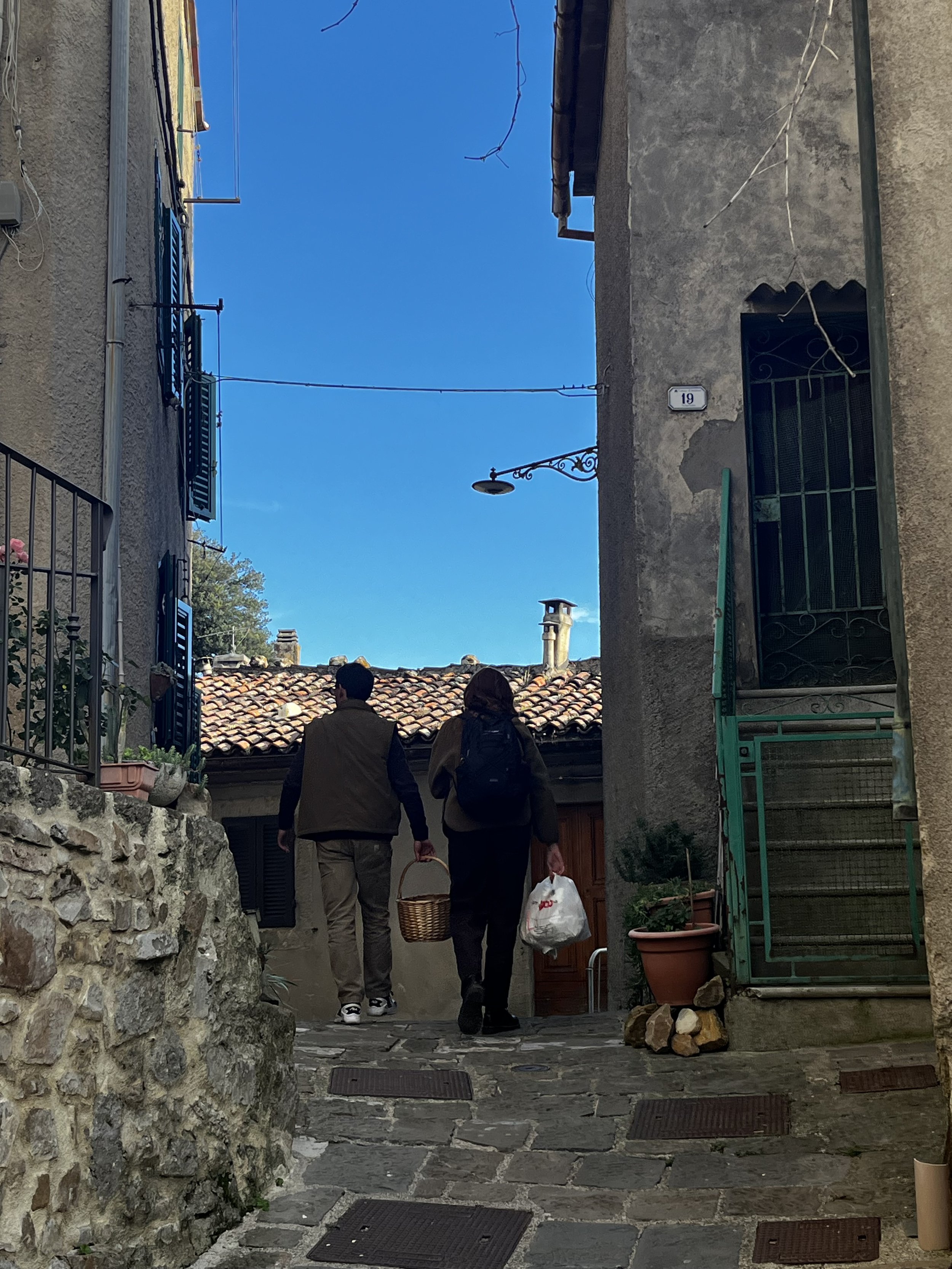
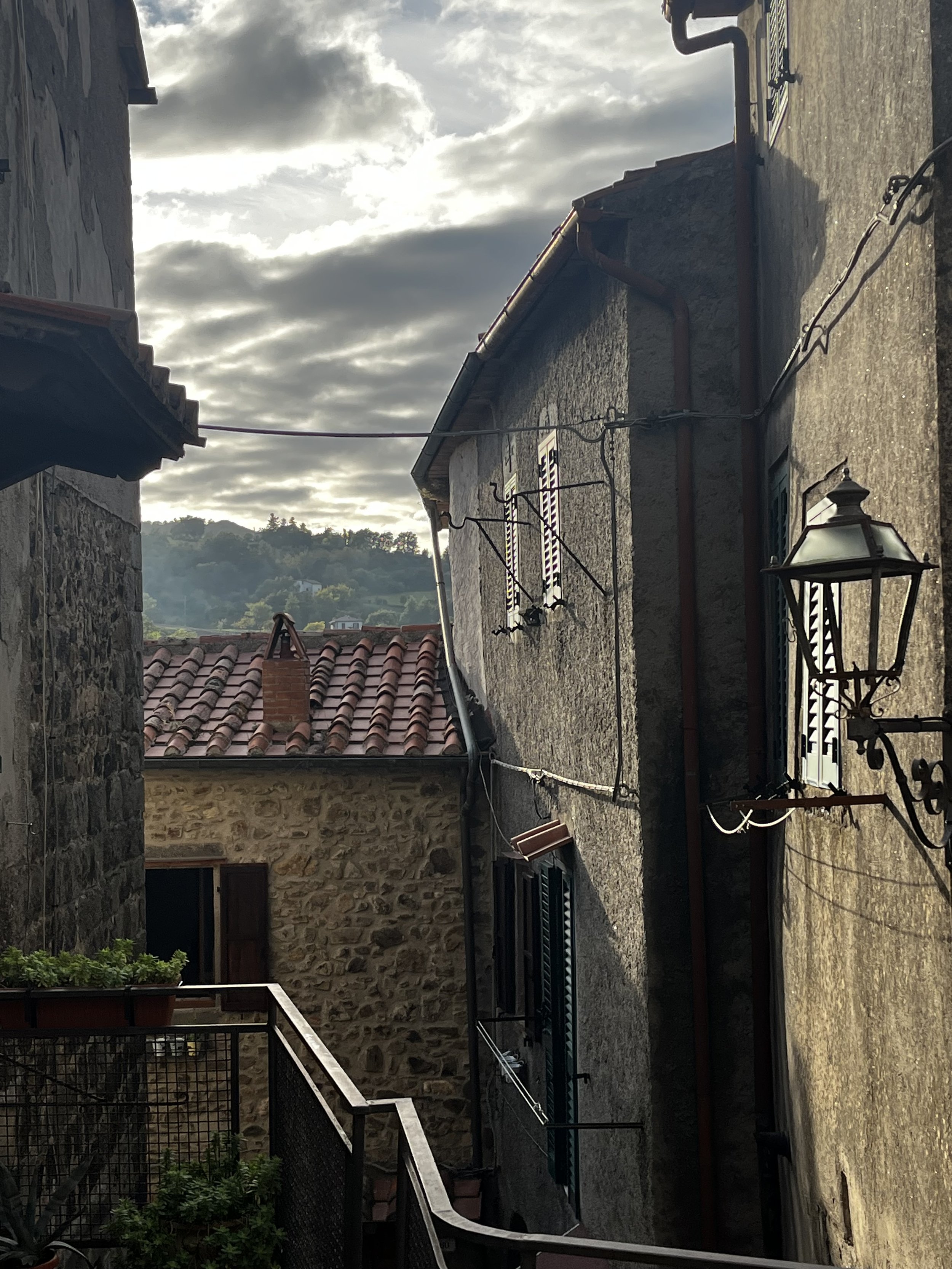
From Umbria, I continued into southern Tuscany and stayed in Arcidosso, a small medieval town on Monte Amiata.
For anyone reading this in California or elsewhere in the U.S., this isn't the Tuscany of Florence and the famous images most people know. Monte Amiata is in southern Tuscany, between the Val d'Orcia and the Maremma, surrounded by woods and small historic towns. Montalcino, which you might recognize because of Brunello wine, is less than an hour away.
I was staying in a friend's little apartment right in the center of Arcidosso, and I happened to be there during the Festa della Castagna, the town's annual chestnut festival.
“Happened to be there” makes it sound peaceful.
It wasn't. The town was absolutely packed.
People had come from nearby towns for the weekend. Parking was a nightmare, there were lines for restaurants, food stands filled the streets and at certain points it was genuinely difficult to move through the center because there were so many people.
This was all happening around the chestnut, something that has been part of the food culture around Monte Amiata for generations. For a few days, an otherwise small mountain town had turned into the place everybody wanted to be.
I loved it.
But before joining the festival on Saturday, I had another plan.
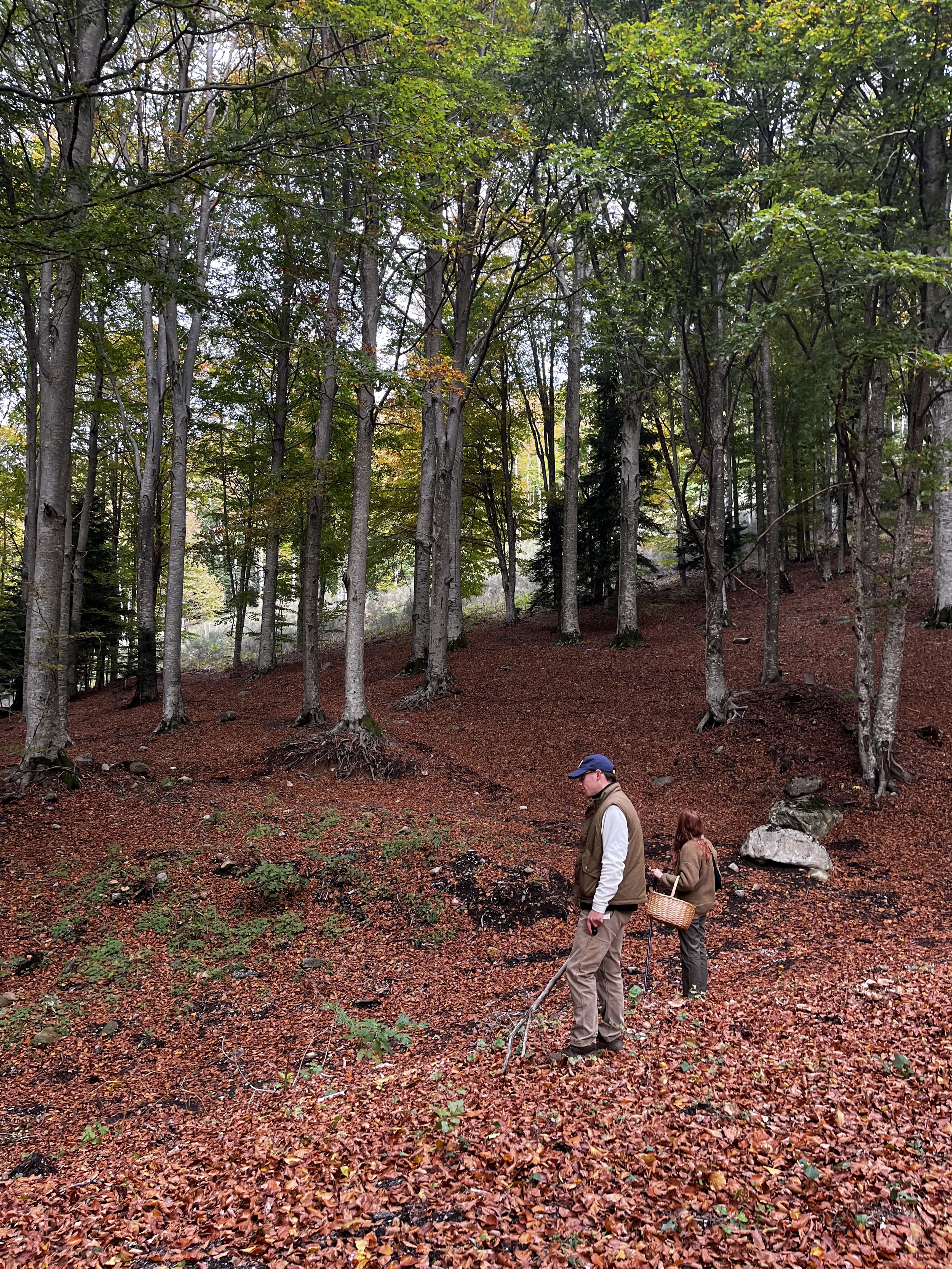
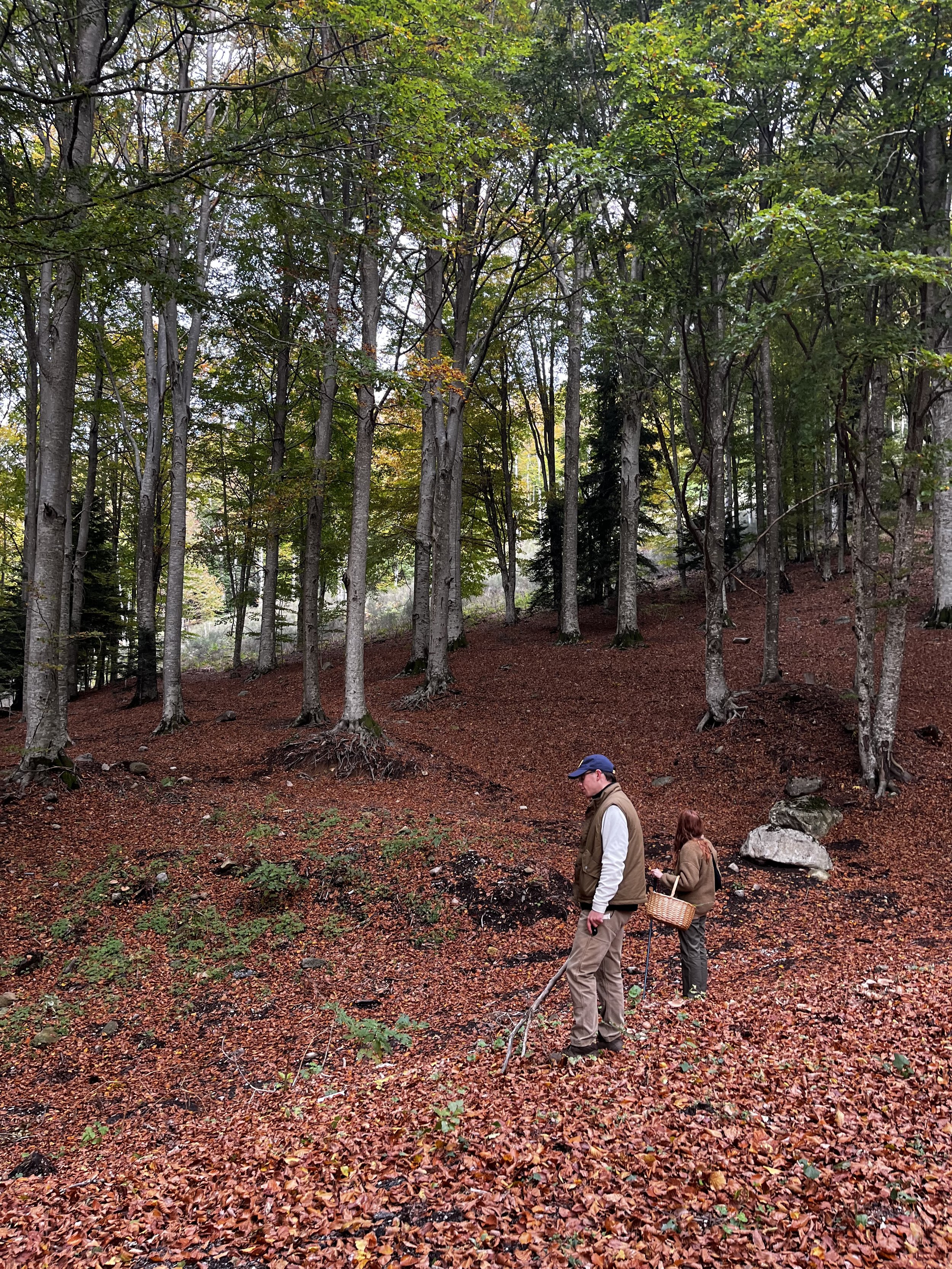
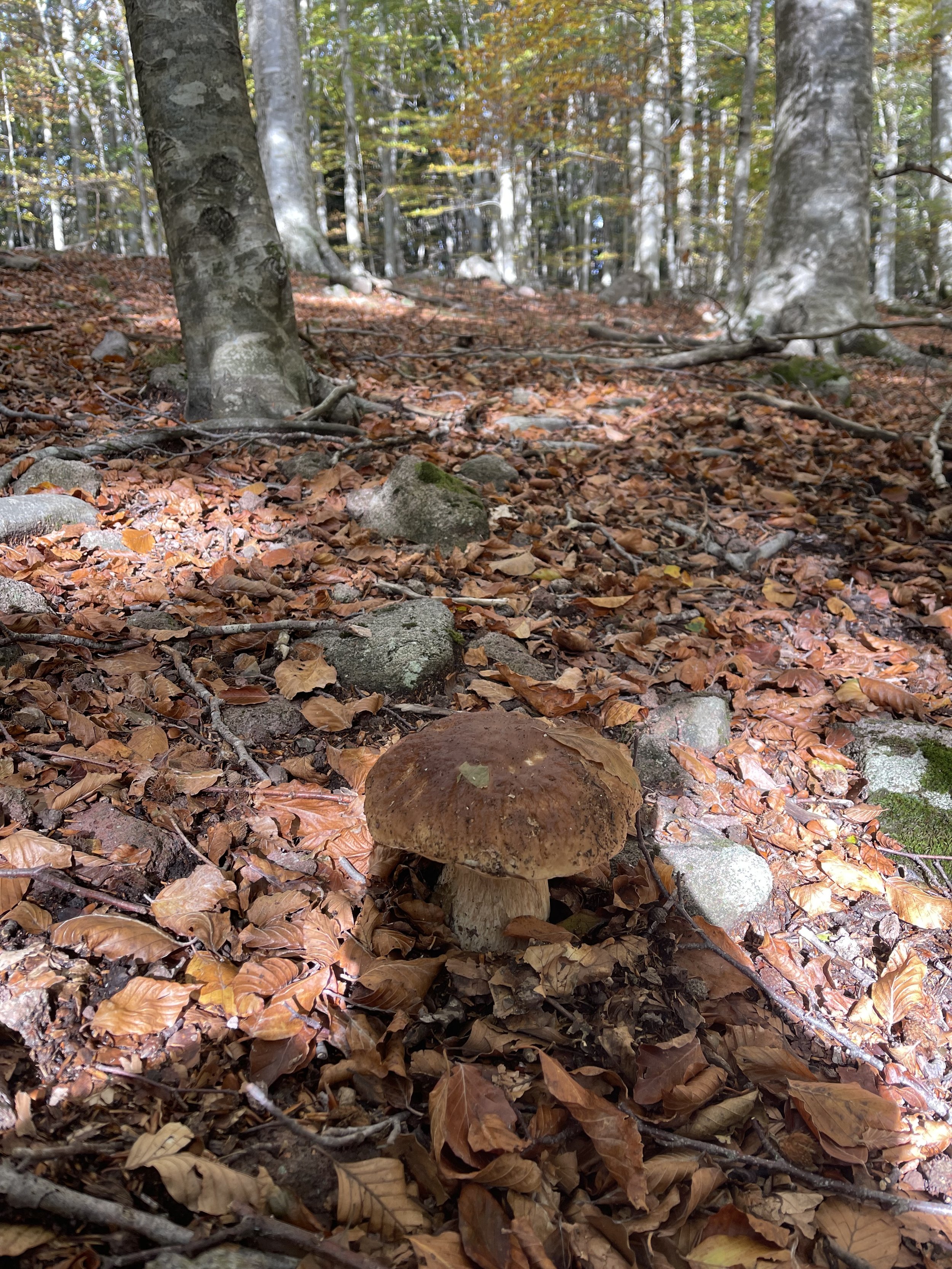
Before 8 in the morning, we went mushroom hunting.
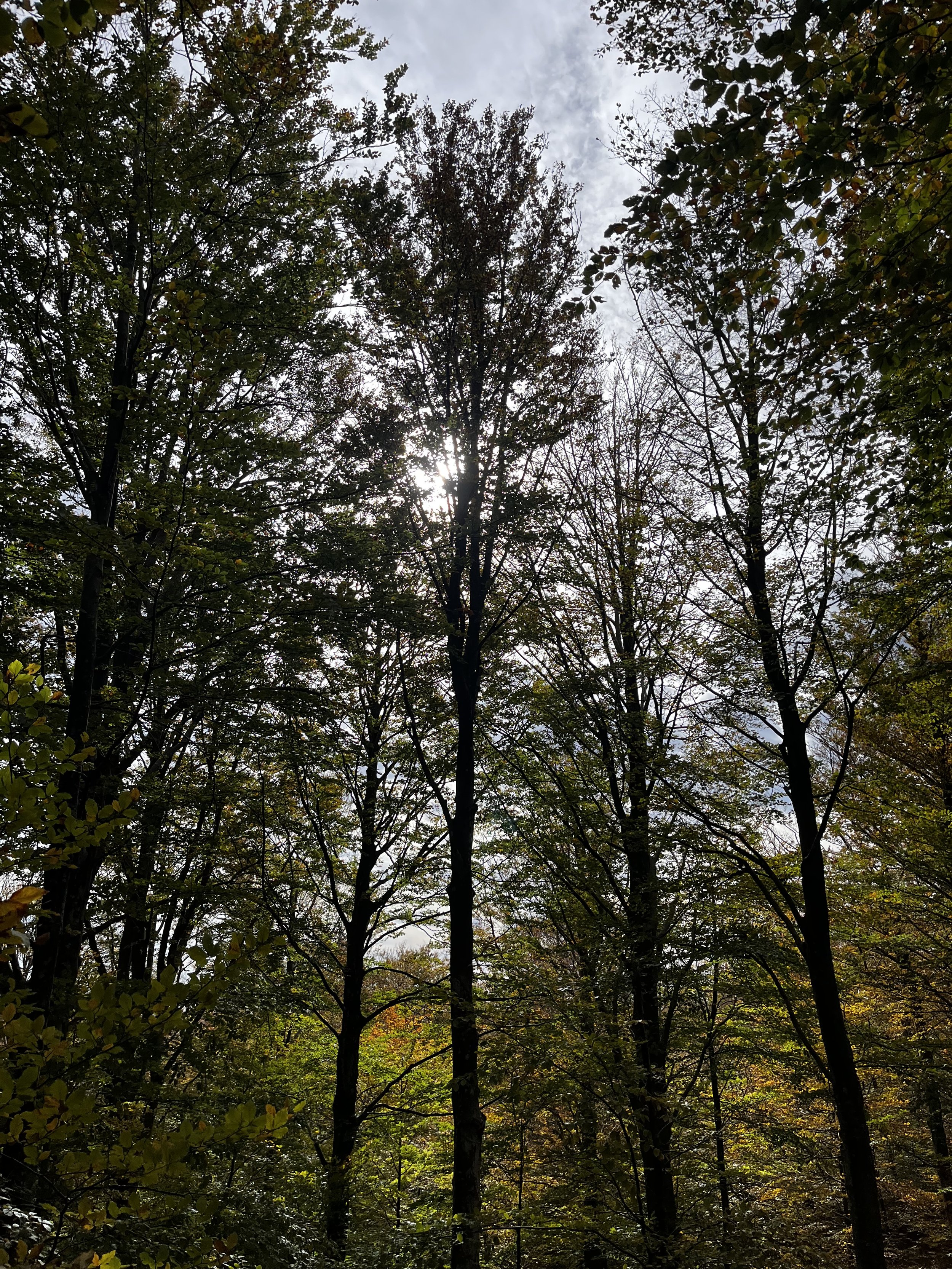
The contrast was probably my favorite part of the weekend. Arcidosso was preparing for another packed day, but a short distance away we were walking through the woods on Monte Amiata in complete peace.
It was cold enough to know it was fall, but nothing unpleasant. The weather during the day was actually beautiful. We walked through the woods, looked under trees and around leaves, and tried to find mushrooms.
We found some.
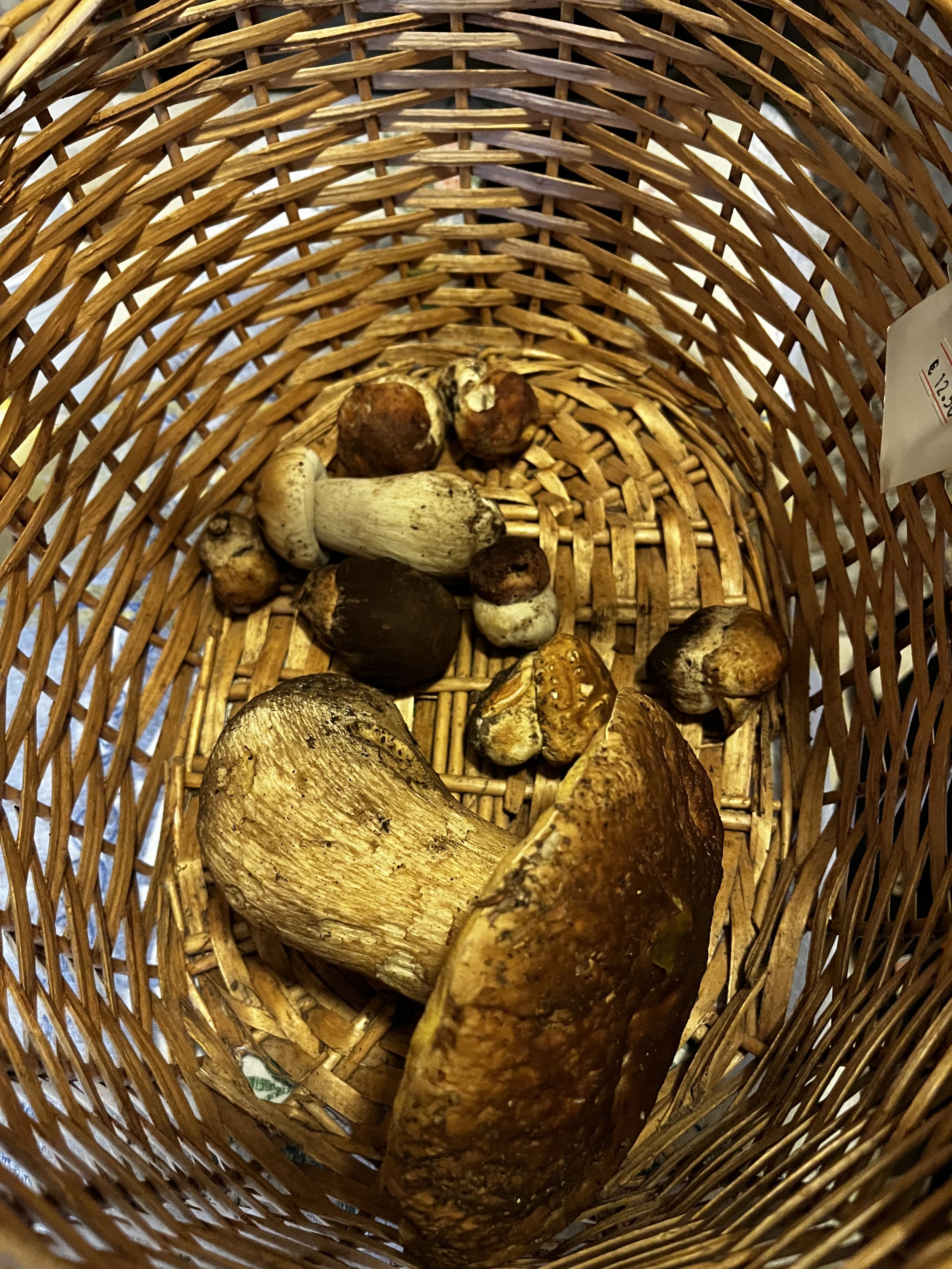
Not baskets and baskets of perfect porcini. I'm not going to make the story better than it was. But we found mushrooms, and I had a great time looking for them.
That's what surprised me most about mushroom hunting. The fun is really in the search. You start paying attention to everything around you in a completely different way. Someone thinks they've found something, everyone goes over to look, and then five minutes later you're back to searching.
We kept what we found and, importantly, had the mushrooms checked and certified by an expert before taking them home. Wild mushrooms are not something to experiment with because you watched a few videos online.
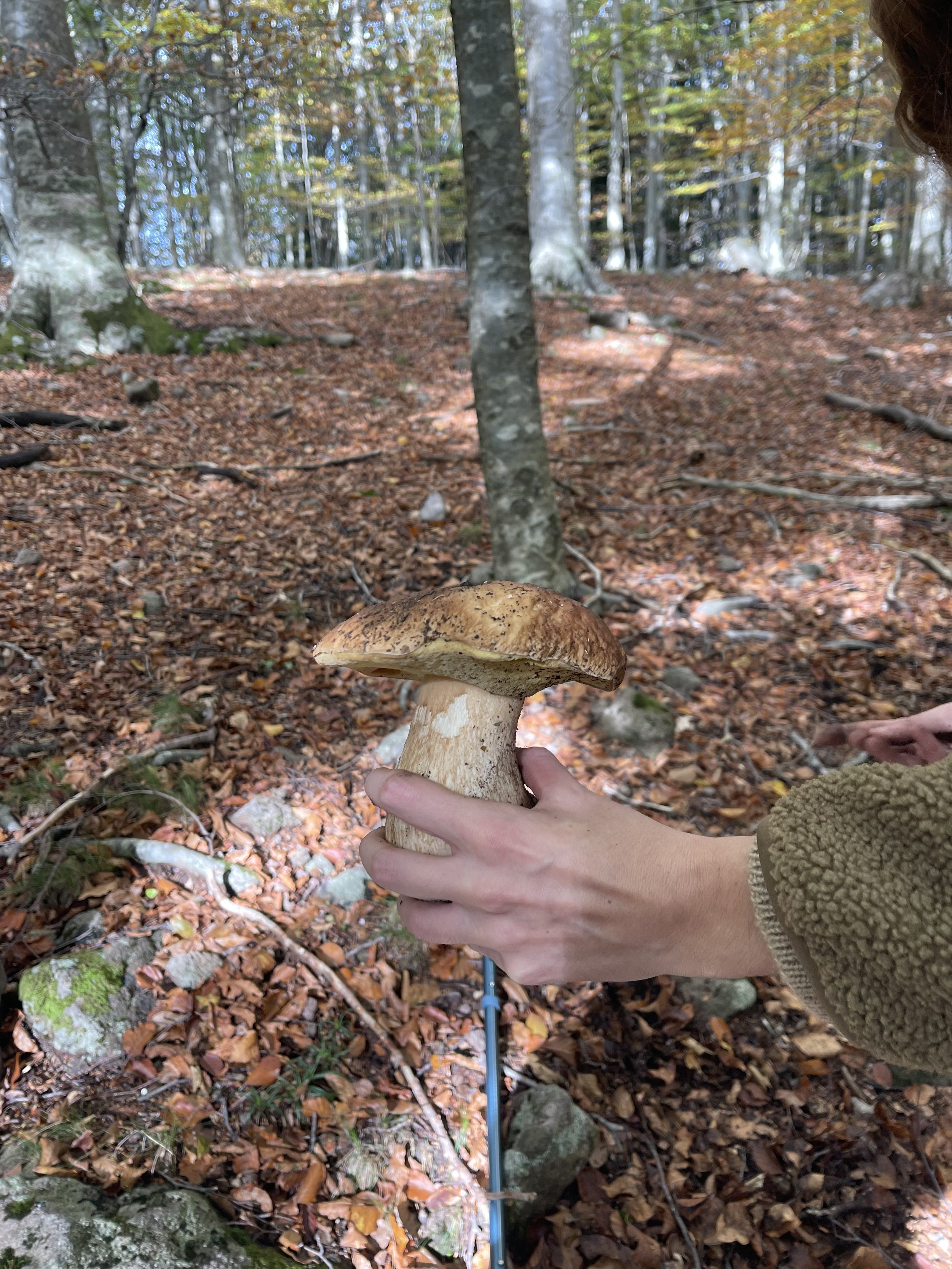
Then I went straight back to Arcidosso and into the Festa della Castagna.
The rest of Saturday was almost the opposite of the morning. People everywhere, chestnuts, food, drinks and restaurants full of families and groups of friends. We stayed out after dinner and eventually went back to the apartment, although sleeping in the center of town during the festival turned out to be slightly optimistic. The streets stayed loud for quite a while.
Sunday morning, we left Arcidosso and drove to Montalcino, one of Tuscany's most famous wine towns and the home of Brunello di Montalcino.
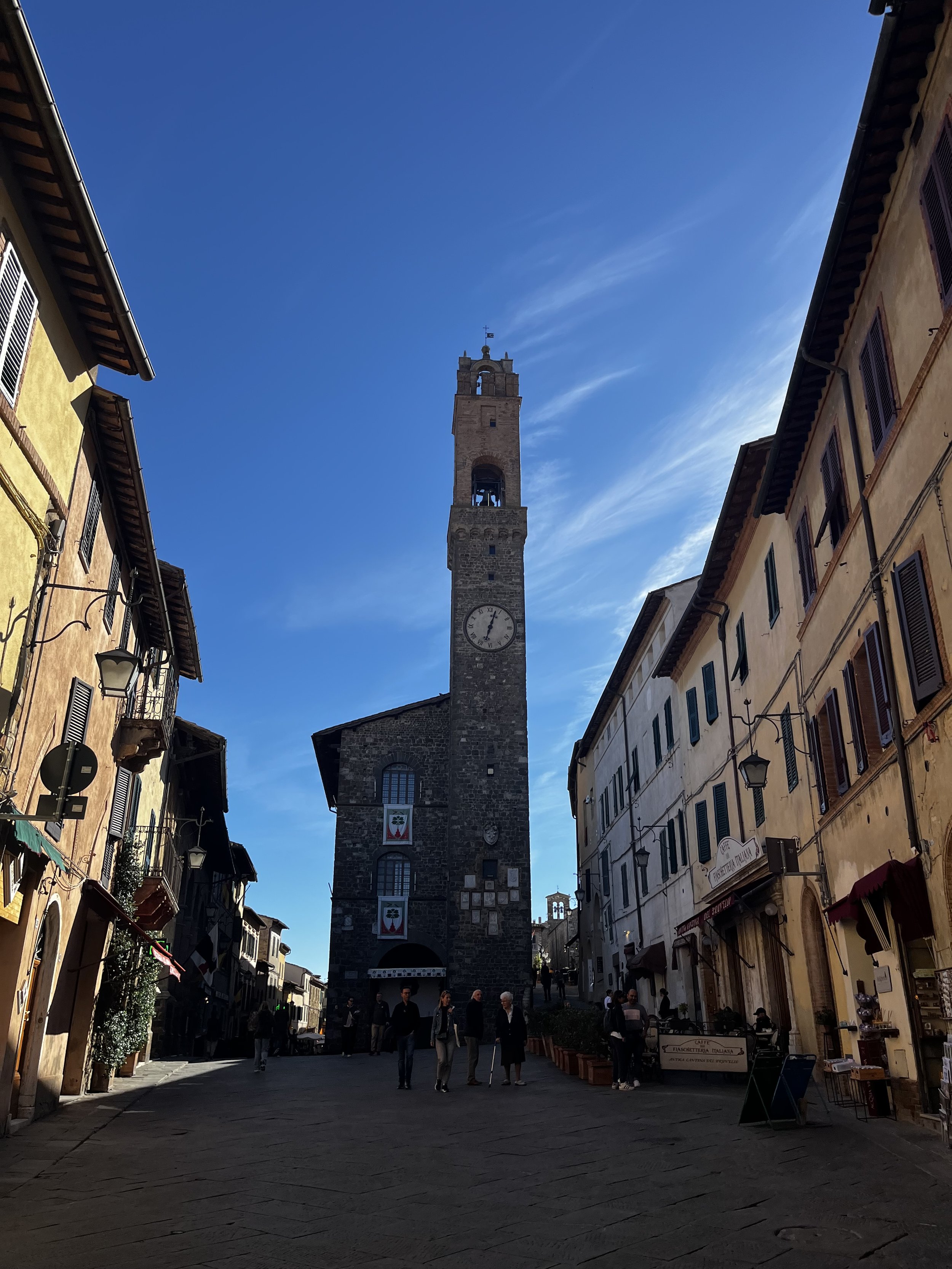
And then I drove back to Rome.
The mushrooms came with me.
That evening, I cooked them for my family.
I cook mushrooms at home fairly often, but this was obviously more fun. The day before, I had been in the woods on Monte Amiata looking for them. Now I was cleaning them and cooking dinner with them in Rome.
That is the kind of experience I keep thinking about when I plan travel.
It made me think about fall 2027
I came home from those four days with more than mushrooms.
I kept thinking about how different this trip would have been if I had done exactly the same route in June.
The towns would still have been beautiful. Lake Trasimeno would still have been there. Montalcino would still make Brunello. But so much of what made these few days fun came specifically from being there in the fall.
Chestnuts were being celebrated because it was chestnut season. We went into the woods because mushrooms were growing. Around Lake Trasimeno, olive oil and seasonal food were appearing at local events because that was what people were producing and eating at that moment.
That is something I want to build more of into the trips I plan.
Not an “olive oil experience” inserted into an itinerary because it sounds Italian. I would rather be there when the olives are actually being harvested and the new oil is being produced.
Not a truffle activity because truffles look good on a brochure. I want to go when people are actually looking for them, selling them and cooking with them.
And that brings me to Piemonte and Umbria in fall 2027.
I've been developing one of our next Hosted Group Journey around these two regions, and this little scouting trip confirmed why I want to do it at that time of year.
In Piemonte, we'll be in the world of Barolo, the Langhe and some of Italy's most important wine producers, but fall also brings white truffles, mushrooms and chestnuts. There are medieval towns, castles and restaurants I want you to explore, but I also want to get outside and make you experience what is actually happening in the countryside.
Then we'll come down to Umbria, where the season changes again. Olive oil, woods, local food, medieval towns and small communities like the ones I was just walking through around Lake Trasimeno.
And yes, after Monte Amiata, I absolutely want to include some time looking for what is growing in the woods.
I don't want this journey to feel like we went to Piemonte and Umbria and happened to be there in the fall.
I want fall to be one of the reasons we went.
And if you don't want to wait for fall...
Our other Hosted Group Journey for 2027 is almost the complete opposite.
In May, we're going to Puglia.
Instead of mushrooms, truffles and colder mornings, we're building that journey around the Adriatic sea, sunny days, Trani’s old town, the countryside near Ostuni, olive groves, local cheeses, bread, wine, the coast and the people who produce things there.
Again, the timing matters. We're going in May because I want you to experience Puglia outside, before the strongest summer heat and the busiest part of the season.
These are the two Hosted Group Journeys I'm currently building for 2027, and they represent pretty well how I like to travel myself.
But you don't have to join one of my groups to travel this way.
Through our Custom Trip Planning, I do the same research for private trips. You tell me when you're coming, who you're traveling with, what you like, what you've already seen and what kind of trip you actually want. Then I start looking.
Sometimes that research leads to a hotel. Sometimes a winery.
Sometimes a town festival I think you should rearrange a day for.
And apparently, sometimes it leads me into the woods before 8 in the morning looking for dinner.
Luca